Concrete Crack Repair in Wollongong
Get a Free EstimateWollongong Crack Repair Specialists
Spotted a crack in your driveway, patio or garage floor? Don’t ignore it. Even small cracks can let in water, which can corrode reinforcement, widen the damage and eventually weaken the whole slab. Concrete crack repair in Wollongong is all about identifying why the crack formed and choosing the right method to fix it.
Hairline shrinkage cracks are very different from structural movement, and each needs its own approach. We use quality fillers, epoxy injections and flexible sealants to restore strength and stop moisture getting in, often blending the repair so it’s barely noticeable. Acting early usually saves you serious money compared with major replacement work. If you’ve noticed cracks starting to appear, drop us a line and we’ll have a look and give you straight advice.
Concrete Crack Repair Services Across Wollongong
Sealing Hairline and Shrinkage Cracks
Fine shrinkage cracks and surface crazing on driveways, patios and paths are blown clean and filled with a sealant chosen for the width of each one. It is a fast, budget-friendly job that keeps out grit, weeds and ants and makes the whole area look tidier.
Stitching Slabs That Have Split
If a crack has divided your slab into separate sections, steel bars or staples can be epoxied in across it to tie the pieces back together. Both halves then carry load as one again, which suits driveways, garage floors and slabs sitting on soft ground near creeks or low-lying coastal land.
Levelling Lifted Crack Edges
Tree roots and ground movement often push one side of a crack up higher than the other. We grind it back flush, or cut out the section and pour it again. On footpaths, shopfronts and shared driveways, that removes the lip that trips people and snags bins and prams.
Injecting Wet, Weeping Cracks
Water seeping through cracks in a retaining wall, pit or concrete tank can be stopped with a polyurethane injection that swells to fill the void. It bonds in damp or actively leaking cracks where a rigid filler would fail, and it helps put an end to the staining that constant weeping leaves behind.
Crack Prep Ahead of Floor Coatings
Before an epoxy or flake coating goes onto a garage, shed or workshop floor, the cracks need repairing and grinding flush. Doing that first stops the new coating from splitting along old lines and gives you a smooth floor for creepers, tool trolleys and bare feet.
Spalling From Corroded Reinforcement
Near the beach at Austinmer, Thirroul and Kiama, salt air often reaches the steel and concrete starts popping or flaking over the rusting bars. We break back to sound concrete, clean and treat the steel, then rebuild using a repair mortar shaped to blend with the surrounding surface.
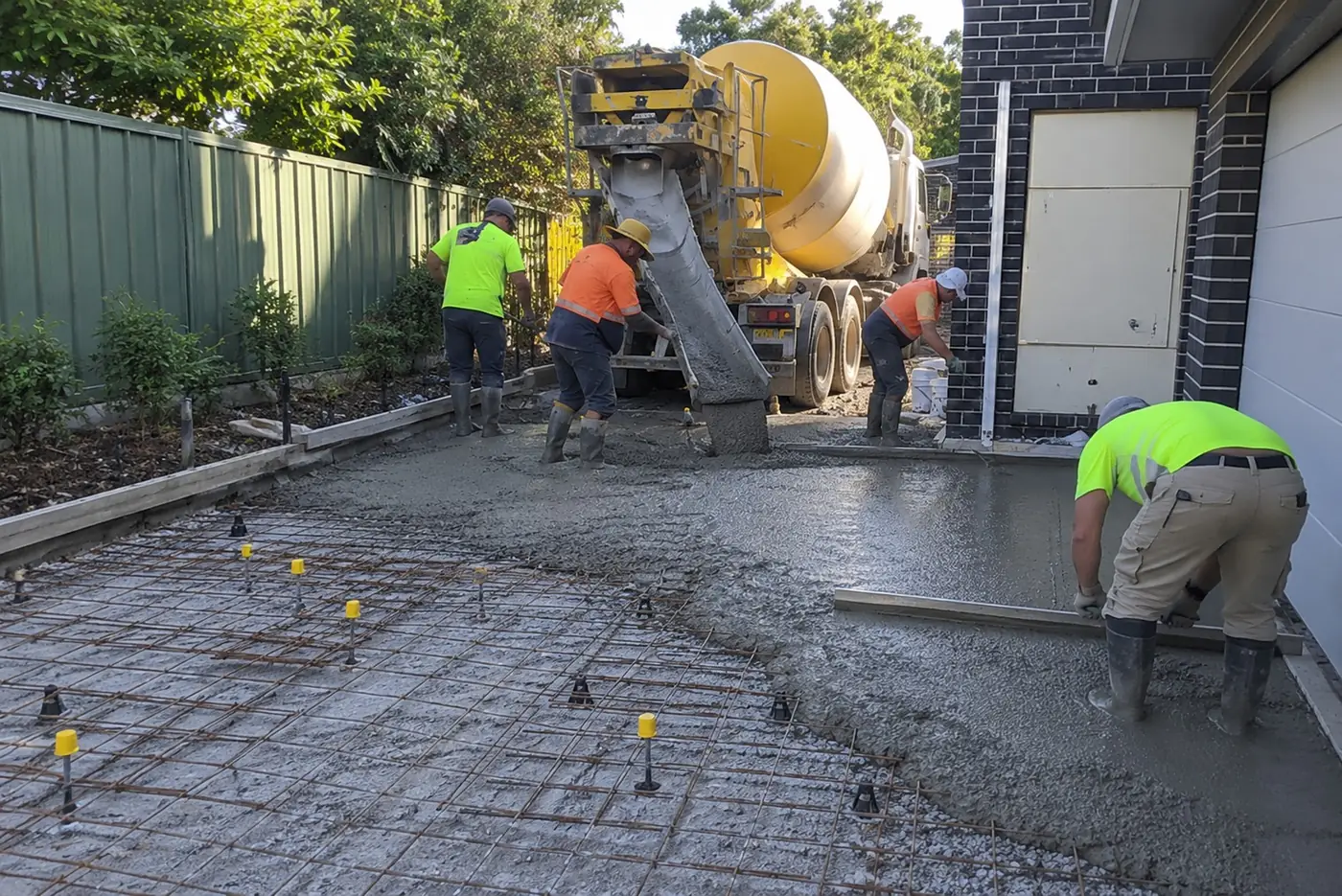
Three Easy Steps to Fixing Cracked Concrete in Wollongong
Thin cracks are easy to overlook until water begins finding its way under the slab. If you have spotted cracking in a driveway, path or slab, any of these steps is a good start, and we will help pin down the cause.
- Photograph it with a ruler: Place a ruler across the widest point, then send a close-up plus a wider shot so we can see the full pattern.
- Watch it for a while: Pencil a mark at each end of the crack, see whether it lengthens over a few weeks and tell us what you find.
- Have us inspect it: We visit to look at drainage, tree roots and slab edges, then explain whether sealing, injection or replacement makes most sense.
A lot of cracking around Wollongong starts when stormwater gets beneath a slab and softens or scours out the base, so knowing the cause shapes the fix. You will get honest advice from us, even if that is just to keep monitoring it. Send us a message through the form to set up your free quote.
How We Repair Cracked Concrete in Wollongong
We Check Whether It Is Still Active
A crack that is still moving needs a completely different treatment from one that has stopped. Rigid fillers quickly let go in a live crack, so we read the pattern, look at any older photos you have and monitor it if necessary before choosing a method.
We Track Down What Caused It
Cracks are a symptom of something else. A downpipe emptying beside the slab, roots from a large fig or jacaranda, an eroded edge or not enough control joints can all be responsible, and filling the crack alone fixes none of them.
Routing for a Seal That Lasts
Sealant spread over a narrow crack tends to peel off within months. Where appropriate, we rout the crack into a clean groove, fit backing rod in wider gaps and fill to the right depth, giving the sealant room to flex without tearing.
Repairs Booked for Dry Days
Most sealants and epoxies only stick to a clean, dry crack, which is tricky during a wet patch. We schedule around the forecast, blow out moisture and debris before filling and hold off for a dry window rather than rushing the job.
Honest About How It Will Look
No matter how neatly it is done, a repaired crack still reads as a line. If a uniform surface is important to you, we will say so from the start and discuss resurfacing, rather than promising a repair that disappears.
Joints and Runoff Fixed Too
When a missing control joint or water running beneath the slab is behind the crack, we deal with it in the same visit by cutting a new joint or diverting the runoff. Leave the cause in place and another crack usually appears close by.
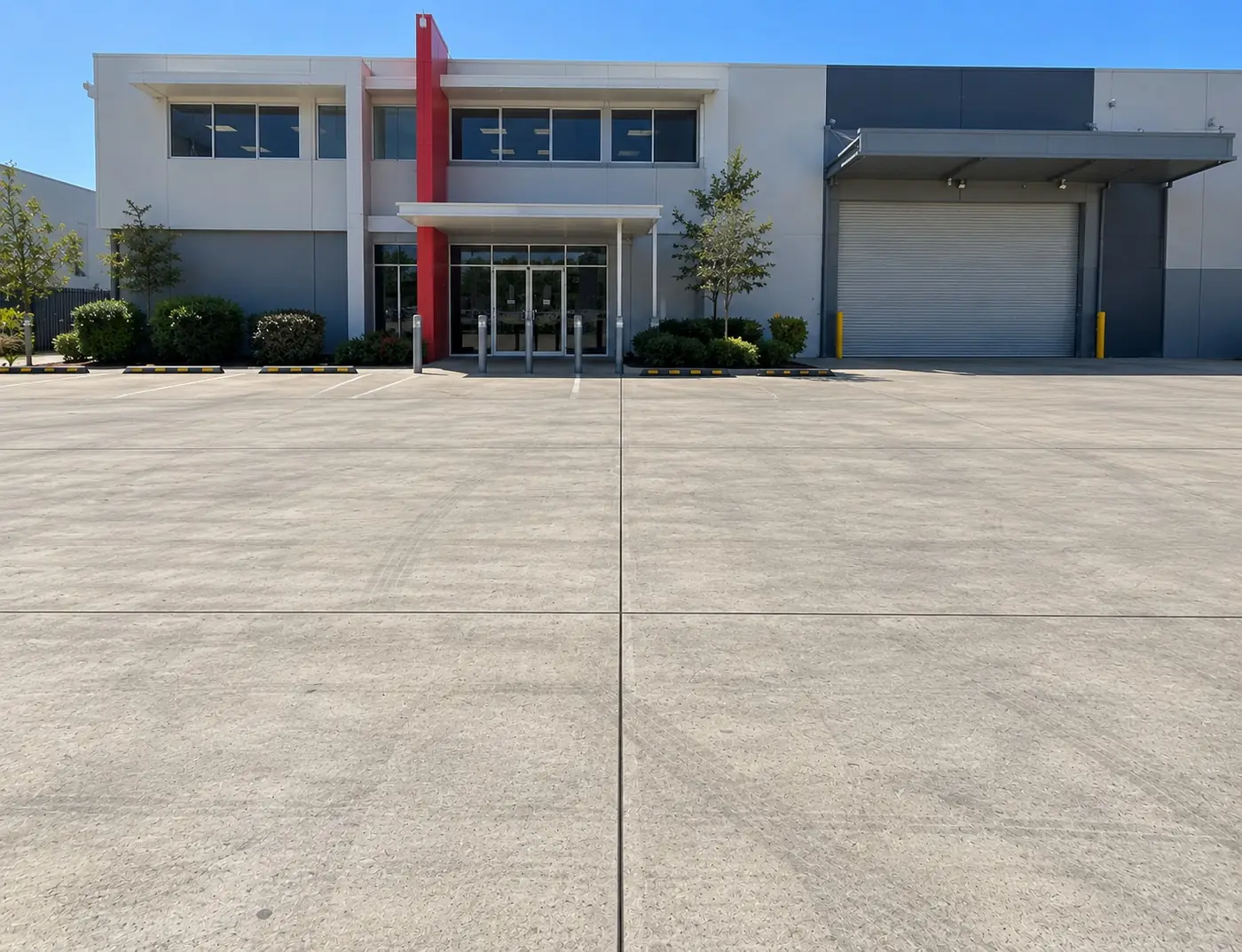
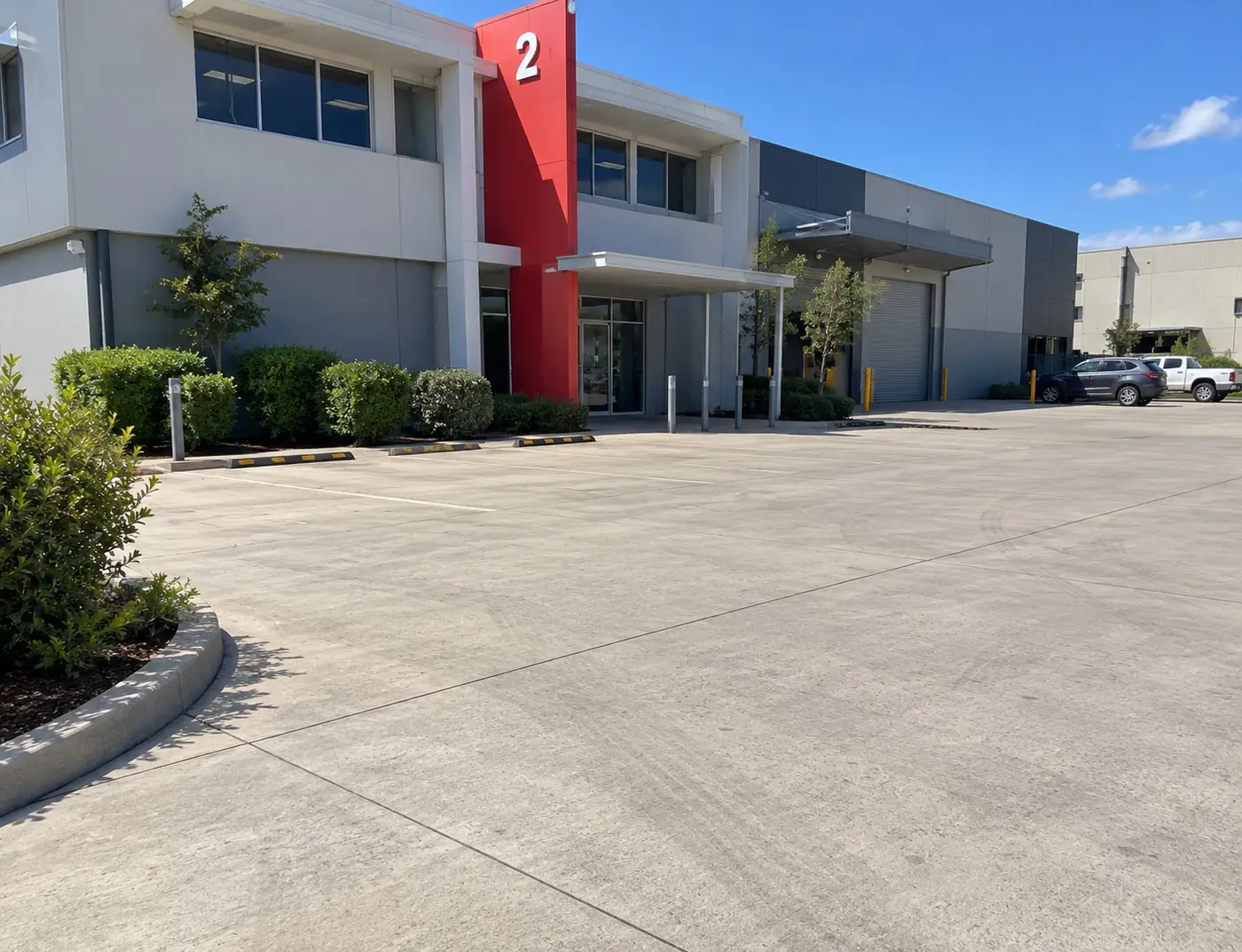
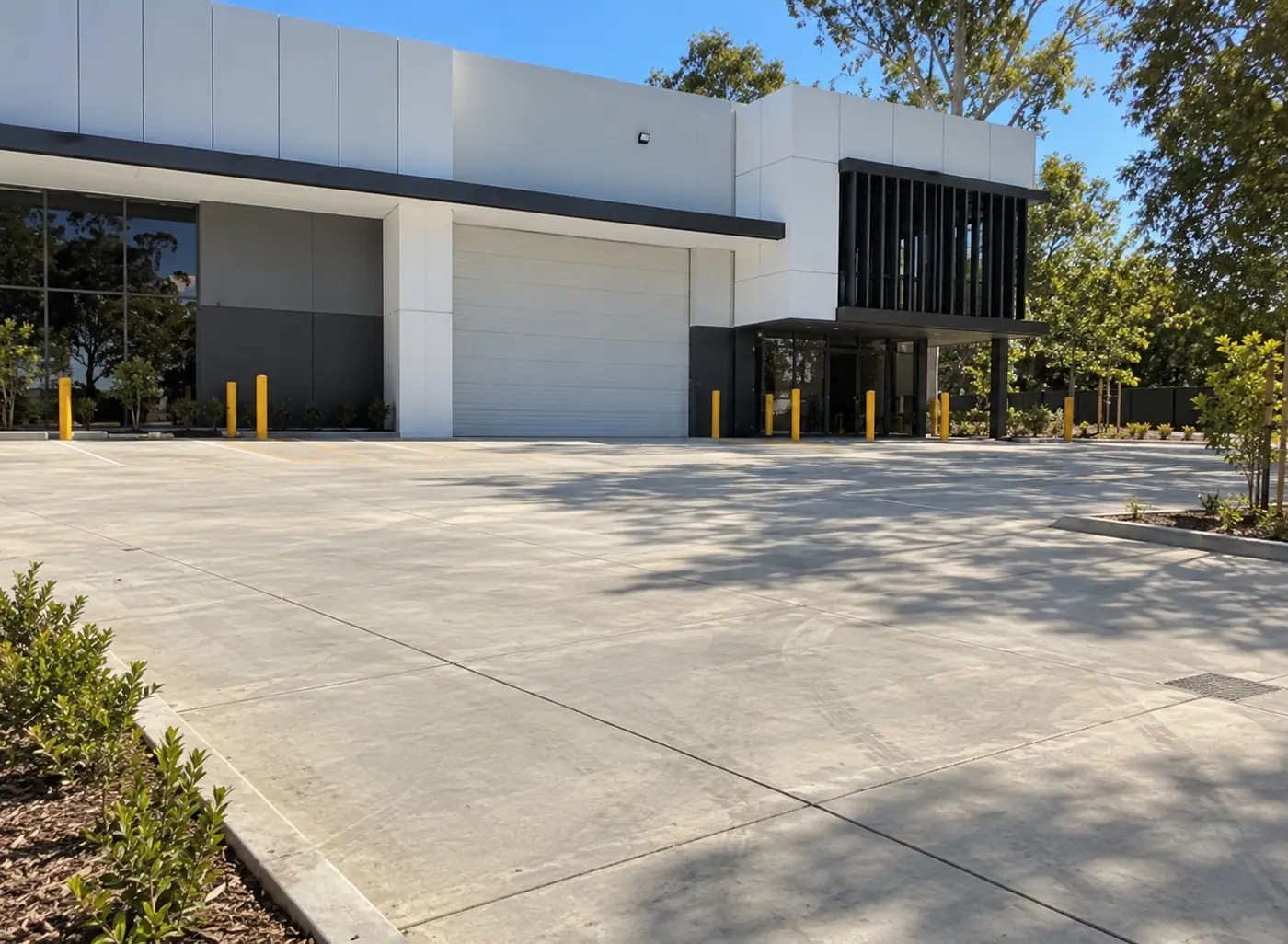
A Look at Our Wollongong Concrete Work



Concrete Crack Repair FAQs
What Wollongong homeowners most often ask about cracked concrete: which cracks are a concern, whether repairs show, how epoxy injection works, why cracks come back and when to act.
Usually not. Concrete shrinks as it dries, and fine hairline cracks are just its way of releasing that stress, which is exactly why control joints are cut. Those cracks are cosmetic and tend to stay the same. It is time for a closer look if a coin fits in the gap, one side has dropped or lifted, the crack is clearly growing longer or wider, or it runs through a retaining wall, footing or house slab. Those signs point to movement or a structural problem, and catching the cause early nearly always keeps the repair cheaper. If you are unsure, a photo sent through to us is a good place to start.
To a degree, yes, and we would rather be upfront about that. A repair turns an open crack into a sealed one, but filler never perfectly matches the colour and texture of concrete that has weathered for years. A well-done repair looks much better than the open crack, though you will still pick it if you look closely. If appearance comes first, the dependable option is to repair the crack properly and then apply a bonded resurfacing coat across the whole area for a single, even finish. We can price both ways so you can weigh them up.
It is a structural repair for a crack that has stopped moving. Small injection ports are fixed along the crack, the surface between them is sealed, and a thin epoxy is pumped in under pressure until the crack is filled through its full depth, not just at the surface. Once cured, the epoxy bonds both faces together strongly, so the concrete acts as a single piece again. The catch is that epoxy is rigid. If the crack still opens and closes as reactive clay swells and shrinks through wet and dry spells, a fresh crack will simply form next to the repair, so a flexible approach makes more sense there.
Most often because the underlying cause was never dealt with. Refilling the crack while the real problem remains only treats the symptom. In the Wollongong area, typical causes are reactive clay that swells when saturated by heavy rain and shrinks as it dries, a poorly compacted base, stormwater flowing beneath the slab and carrying fines away, tree roots, and slabs poured with too little reinforcement or too few control joints. While any of those are still present, expect the crack to reopen or a new one to form nearby. That is why we look at drainage, roots and slab edges before recommending anything.
Sooner is usually better, particularly heading into the late-summer and autumn rain. Open cracks let water in, and during heavy downpours it can carry fines out from under the slab, leaving edges unsupported and the crack wider. Damp cracks also invite mould and algae. When water reaches the steel mesh, it rusts, expands and breaks the concrete from within, turning a minor sealing job into a far larger repair. Early sealing costs little. The main exception is when a crack needs monitoring for movement before we pick a method, and that normally takes weeks, not months.
More services worth a look
Not sure about a crack?
Send a clear photo with a coin next to the crack and we will give you our honest take.