Concrete Kerbing Specialists in Wollongong
Get a Free EstimateWollongong Concrete Kerbing
Kerbing might not be the flashiest part of a project, but it does plenty of heavy lifting. It defines edges, directs stormwater, protects gardens and gives driveways, car parks and streets that clean, professional look. Concrete kerbing in Wollongong is used on everything from residential developments and shopping centres to roadways and landscaped garden beds.
Done well, it channels water safely away and stands up to years of bumps from cars and mowers. Done poorly, it cracks, shifts and creates drainage headaches. We use slip-form machines and traditional formwork depending on the job, so you get tidy lines and consistent profiles whether it’s a short curve or a long straight run. Whatever your site looks like, we’ll help you choose the right kerb style and get it installed properly.
Kerb and Edging Work We Do in Wollongong
Mowing Strips and Garden Edges
Over edging every border with the whipper snipper? A low concrete strip along the lawn lets one mower wheel ride straight down it. Couch and kikuyu romp along through our warm, rainy summers, and a firm edge helps keep those runners out of the garden beds.
Slipform Kerb Lines
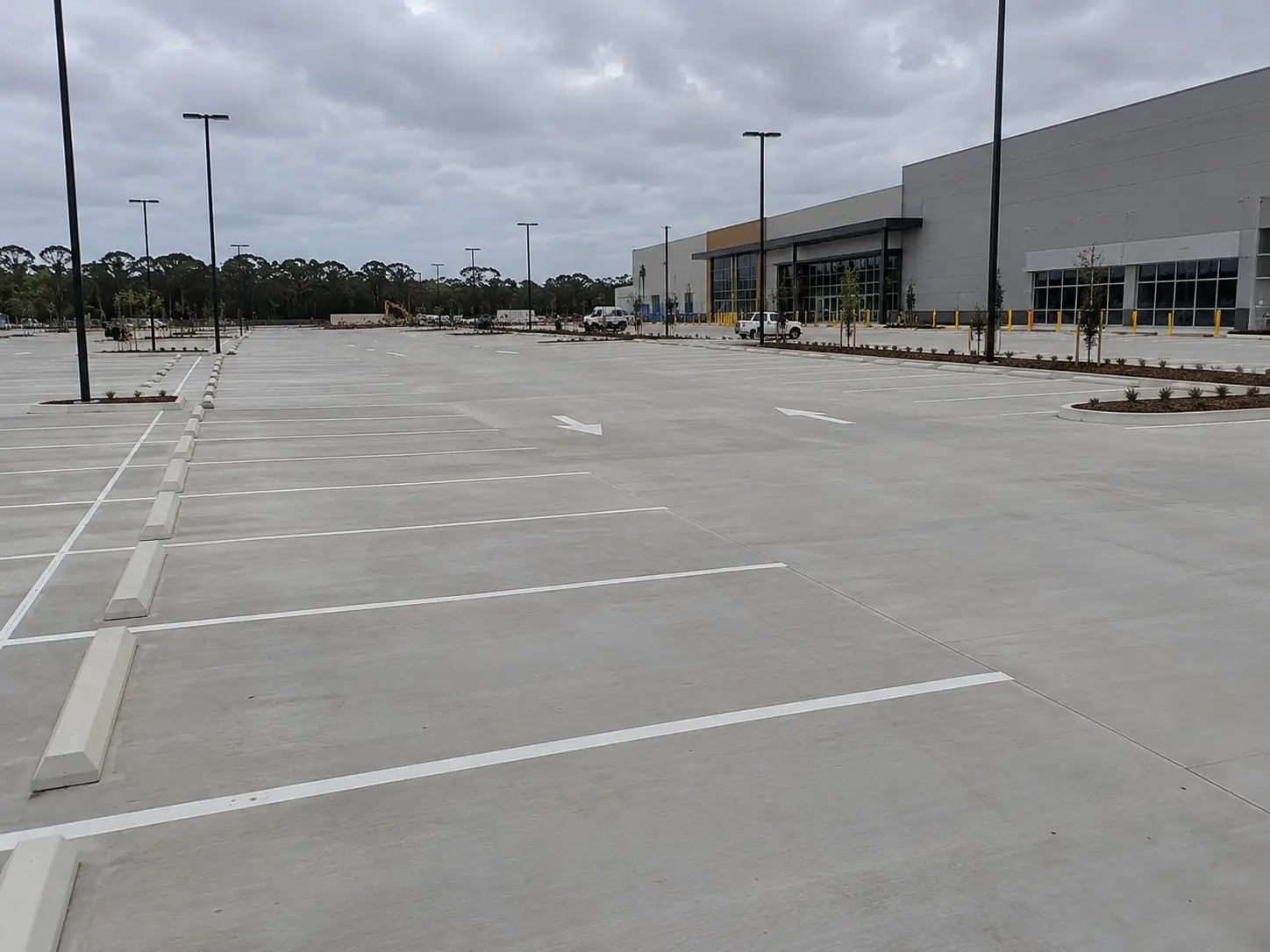
On car parks, access roads and commercial jobs, a slipform machine extrudes kerb in one continuous run from a stiff mix. It's far quicker than forming by hand and produces long, consistent lines, perfect when the job runs to hundreds of metres.
Laybacks and Mountable Kerbs
A layback lowers the kerb where the driveway meets the street, while a mountable profile lets vehicles ride over without scraping. We tie both into the road levels so cars roll in smoothly and the gutter still carries water past your crossover.
Barrier Kerbs and Traffic Islands
Want vehicles kept on the bitumen? We build upright barrier kerbs, islands and landscaped medians for shopping centres, servos and industrial yards. The higher face stops drivers clipping corners across your garden beds and footpaths.
Restraints for Pavers and Gravel
Pavers and loose gravel creep outward unless something holds them. A concrete edge restraint locks everything in, so a paved driveway holds its shape and a big storm doesn't scatter gravel across the lawn.
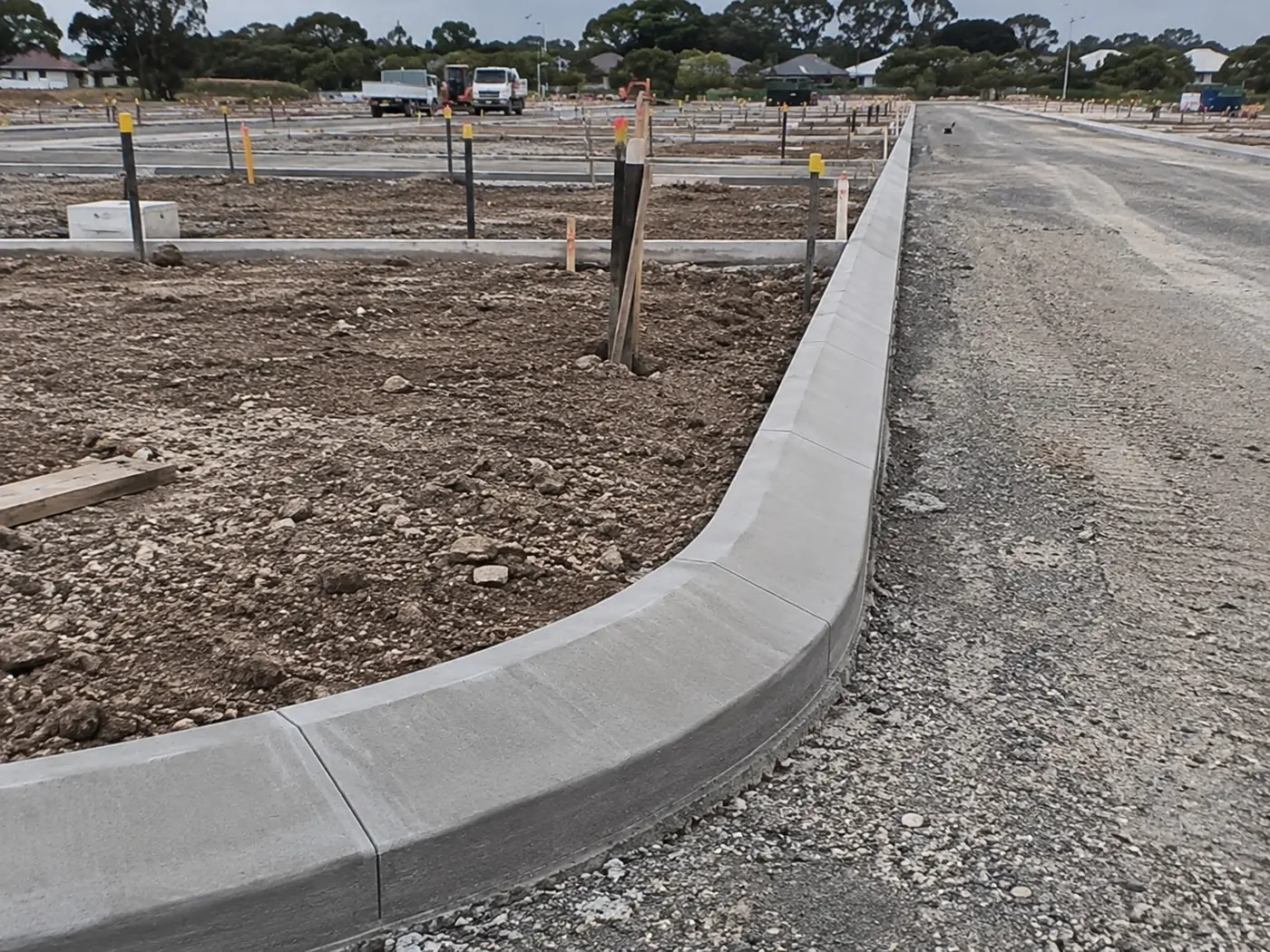
Kerb and Gutter for Subdivisions
We work with developers and civil contractors to pour kerb and gutter on new estates ahead of the road seal. Our pours fit around the earthworks program, and levels are taken from the surveyor's pegs rather than guessed.
Getting Your Wollongong Kerbing Underway
Good kerbing keeps garden beds in shape, steers runoff to the right place and gives a driveway a crisp, finished edge. Starting the process with us is easy, so go with whichever option suits you.
- Mark up an aerial photo: Take a screenshot of your property from above, draw the kerb line and keep it for our site visit. In the contact form, give us rough lengths and any tight curves.
- Meet us on site: We'll walk the line with you, see how stormwater falls and decide whether slipform or hand-set forms suit the job better.
- Send us your questions: Ask about garden edging, driveway borders or car park kerbs, and we'll let you know what details we need to price it accurately.
Every kerb is set out with string lines and a level, so curves flow evenly and runoff reaches the right outlet when heavy rain arrives in late summer and autumn. Share a few details about your property and we'll come back with a clear written quote at no cost. Pick one of the options above and get in touch.
What Local Property Owners Get From Our Kerbing Team
Beefed Up Where Tyres Touch
A garden edge and a kerb that delivery trucks scrape every week are very different jobs. Wherever wheels are likely to hit, we deepen the section and add reinforcement, because that's the spot where unreinforced kerbing gives out first.
Joints Spaced to Control Cracking
Any long run of concrete will crack somewhere as it shrinks, so we decide where. Joints are tooled or saw-cut at regular intervals along the kerb, which keeps cracks tidy inside the joints instead of running across the face.
Underground Services Located First
Irrigation lines, stormwater pipes, power and telecommunications cables are often right under the planned kerb line. We check for buried services through Before You Dig Australia and on site before excavating, avoiding costly strikes, outages and holdups.
Backfilled and Tidied
After the forms are stripped, we backfill and compact behind the kerb so it's supported on both faces, then tidy the lawn or garden edge. You won't be left with an open trench of loose soil to deal with.
Kerbs That Suit the Property
New kerbing should sit comfortably beside your driveway, paths and garden. We match the surface texture of your existing concrete, and if a fresh grey strip would stand out too much, we can tint the mix with an oxide.
Clear Per-Metre Pricing
Quotes are given per linear metre for the profile you've picked, with excavation, base, steel, concrete and delivery listed separately. That makes it easy to weigh up a mowing strip against a full kerb before you decide.
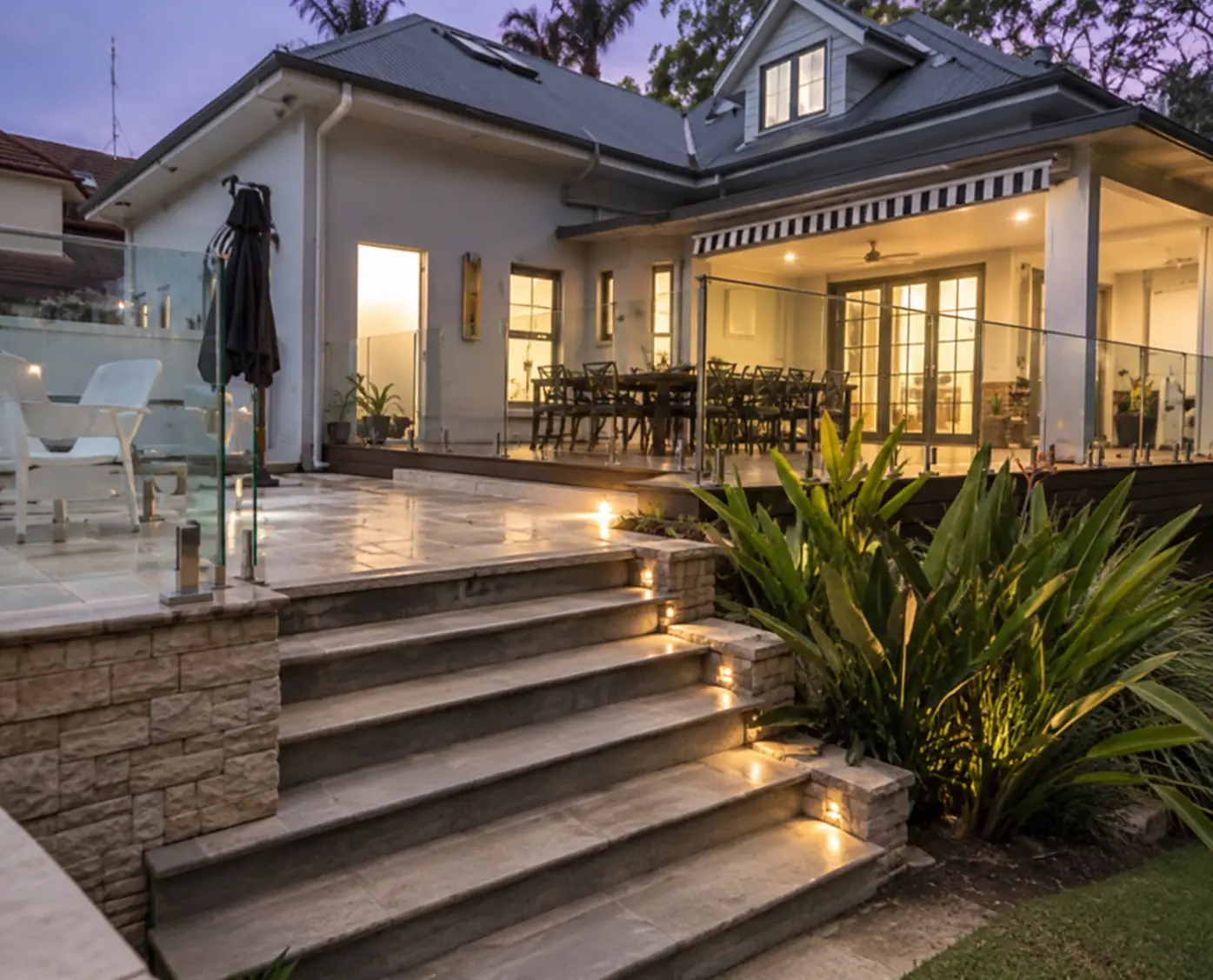
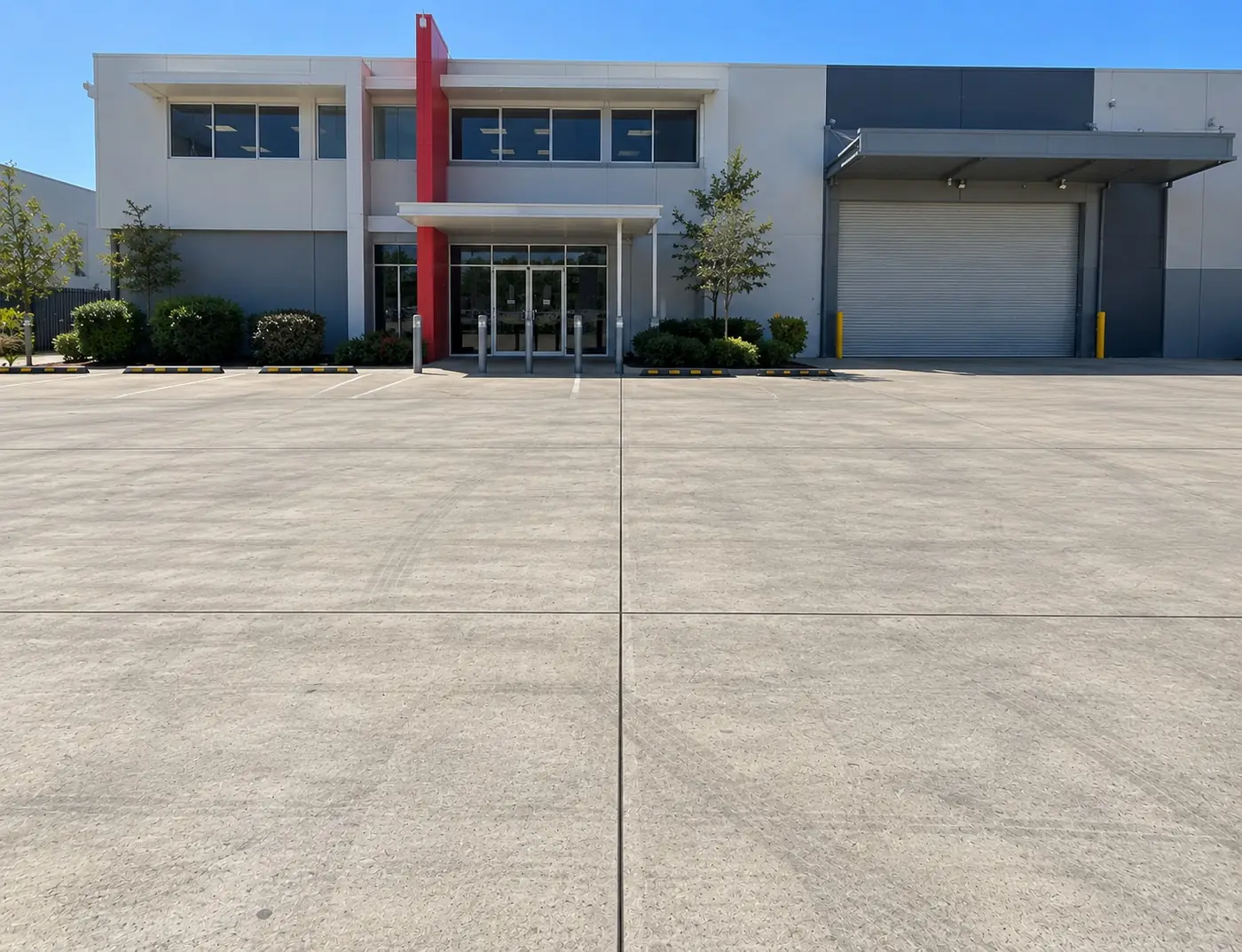
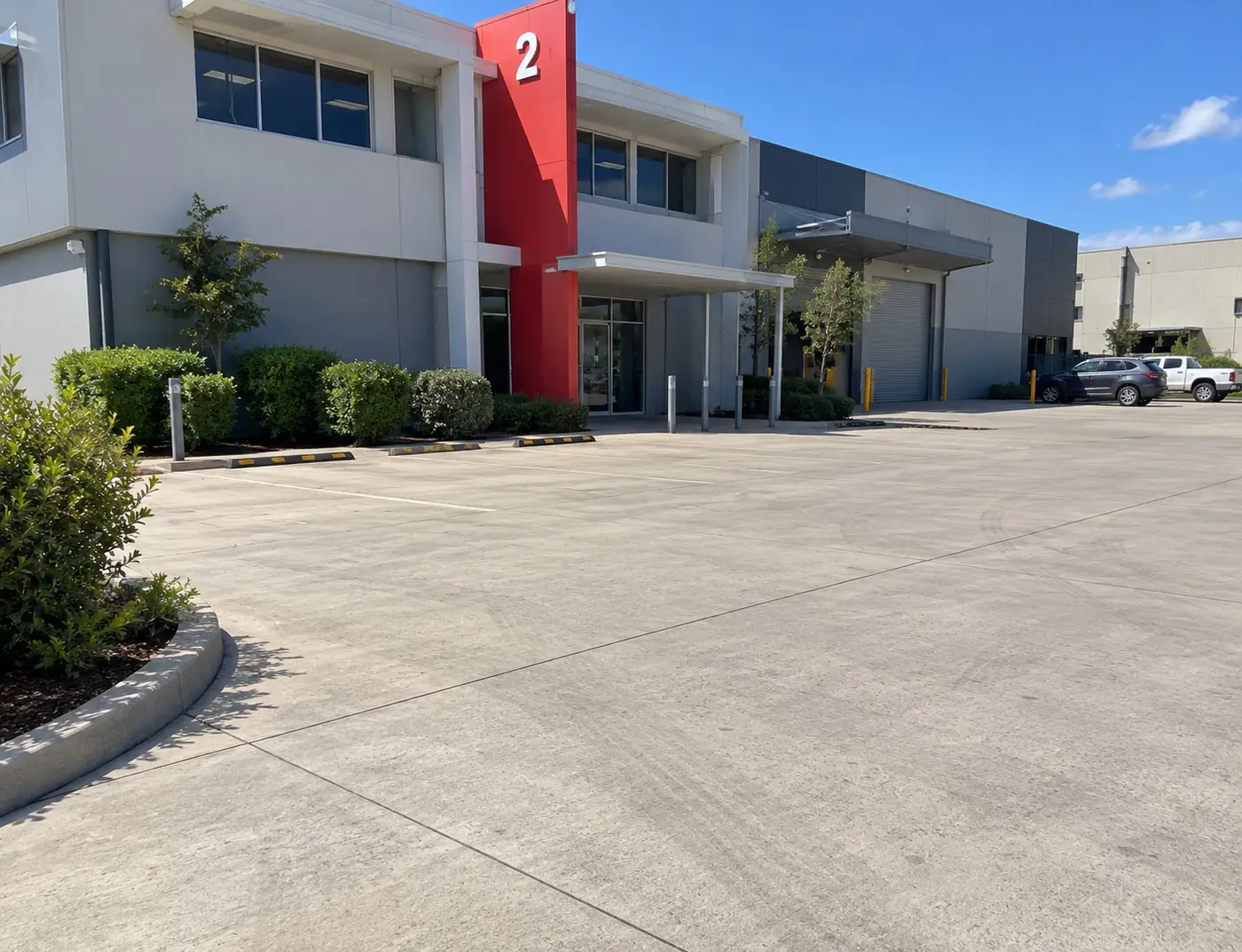
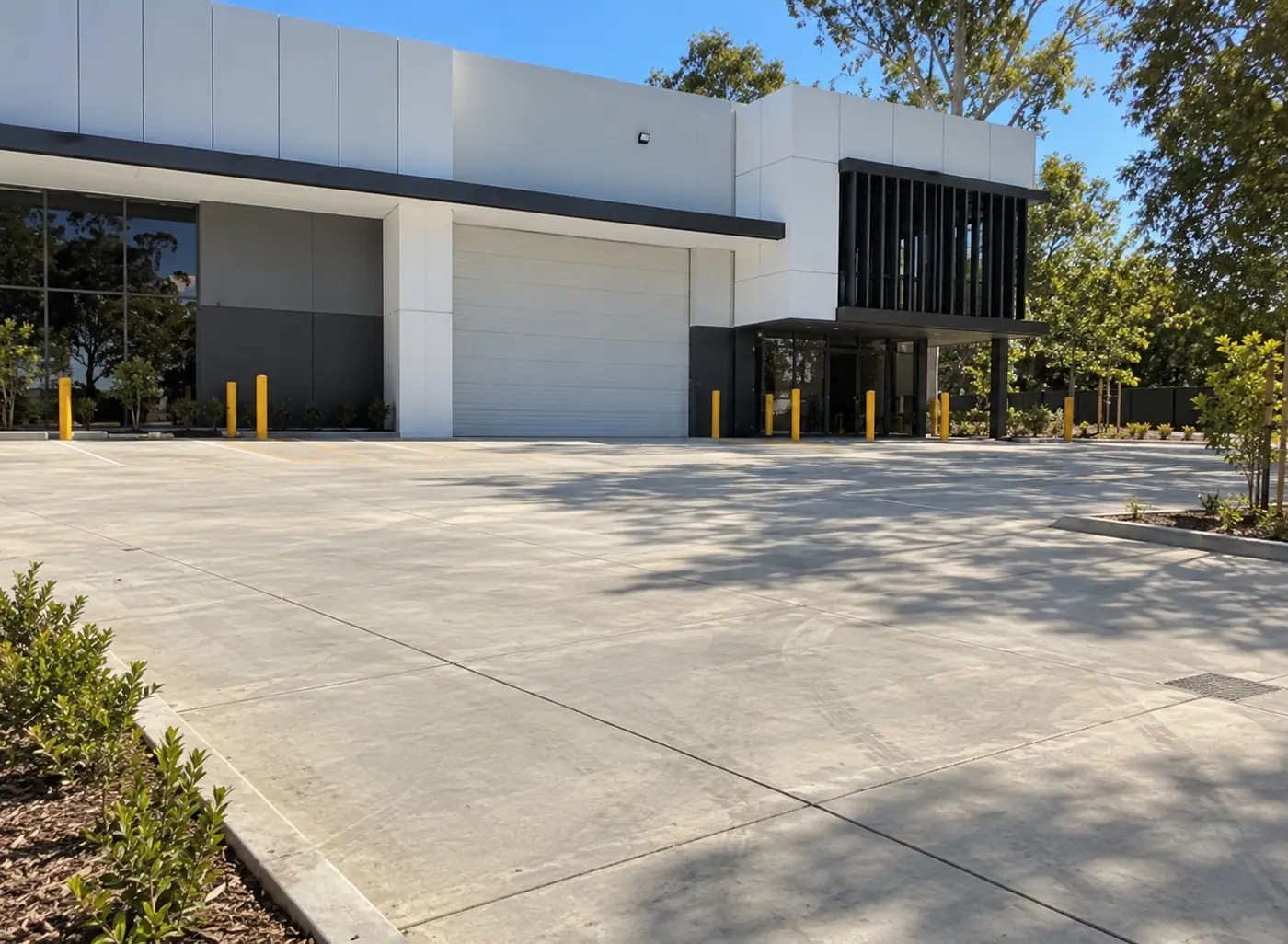
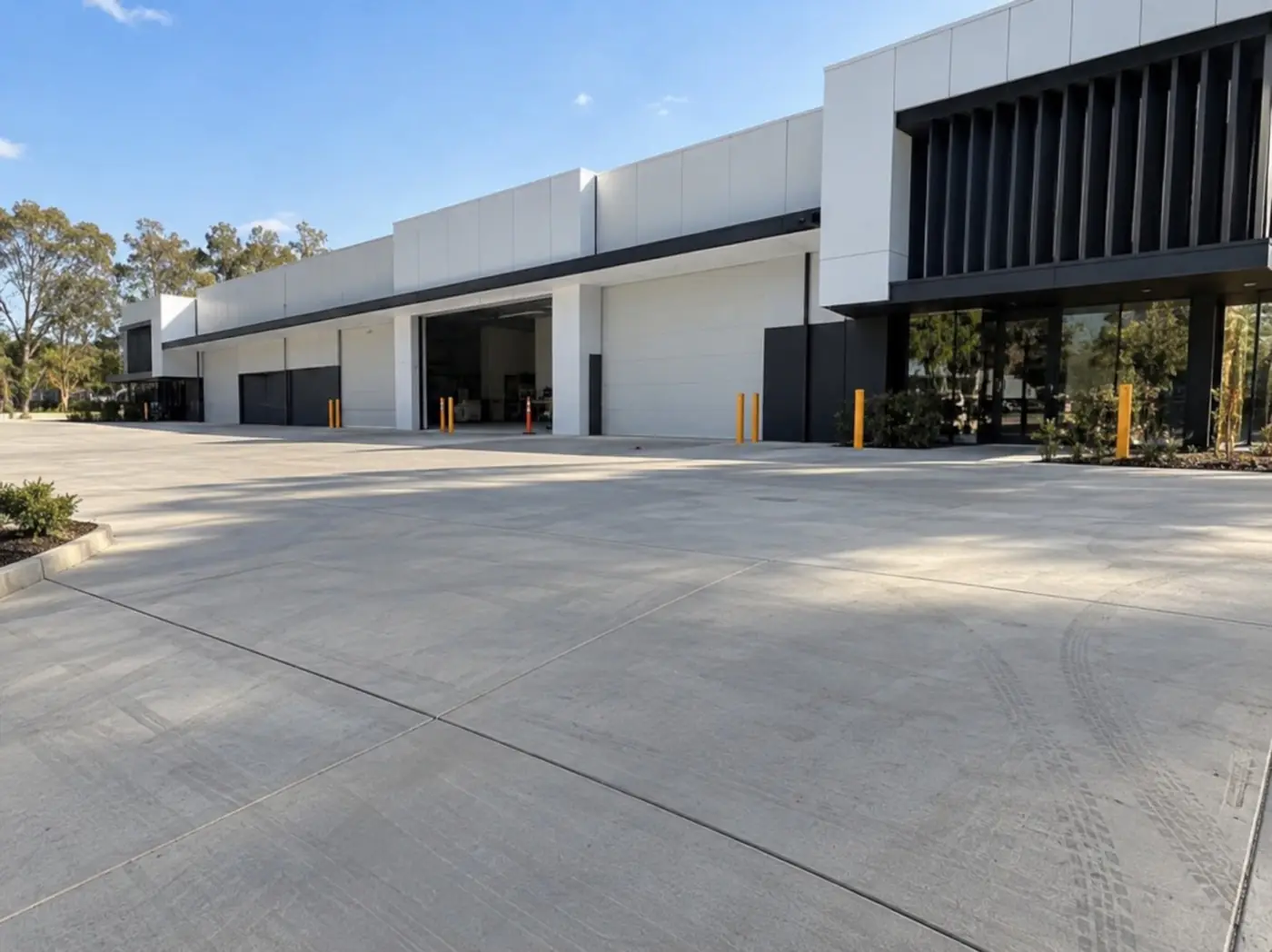
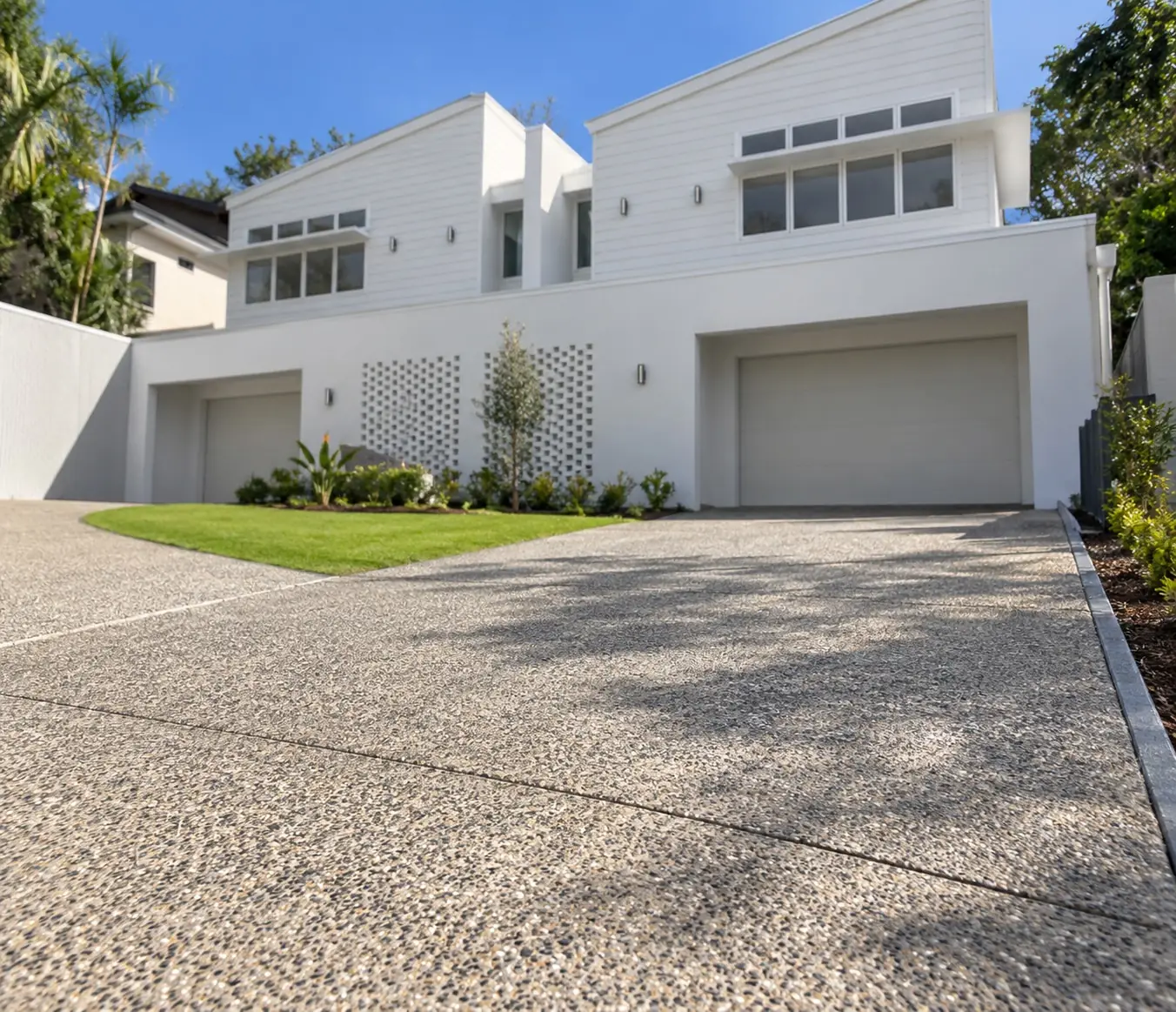
A Look at Our Wollongong Concrete Work
Concrete Kerbing Questions
What Wollongong clients usually ask about kerbing, including metre rates, matching existing kerbs, drainage, when you can drive on it and whether curves are possible.
Kerbing is priced per running metre, and the profile you choose has the most influence. A narrow mowing strip takes much less concrete and formwork than full kerb and gutter, so its metre rate is far lower. Beyond that, the price reflects site preparation, the number of curves, whether reinforcement is needed and how easily the truck can get to the line. Sandstone, soft wet ground and tight access all add time. Small jobs carry the same setup and delivery costs as big ones, which lifts their rate per metre. We'll measure the real run on site and give you a fixed price.
In most cases it can. Where a section has cracked, dropped or been clipped by a car, we cut back to solid concrete, form the replacement to the same profile and alignment, and reproduce the surface finish. Colour is harder, since older kerbs have weathered and darkened while new concrete starts off pale. That contrast usually softens after a couple of years of sun and rain. If a close match is important, a small amount of oxide in the mix can bring it nearer, and we'll explain what to expect before pour day.
Laid out properly, it can make a real difference. A plain kerb stops water spreading sideways, and kerb and gutter collects runoff and carries it to a pit, the street gutter or another approved outlet. That's important when an East Coast Low or summer storm dumps heavy rain, particularly on sloping blocks under the escarpment where water moves quickly, or on flat coastal lots where it has nowhere obvious to go and can sheet across the driveway, erode garden edges or pool beside the house. We study where the water flows now and where it should end up before setting the line. A poorly placed kerb can trap water, so the planning is as important as the pour.
Generally, keep cars off fresh kerbing for at least a week, the same as for a new driveway. Kerbs are slender, so a tyre or towbar knock in the early days can chip or crack the edge. On hot days we cure the concrete properly so it doesn't dry out too fast. Backfilling and replacing lawn or mulch can usually be done gently after two or three days. We'll give you guidance that suits your kerb profile and the conditions on the day of the pour.
Definitely. A true curve looks much better than a string of short straight sections pretending to be one. Our flexible formwork handles the bends found in most gardens and driveway entrances, along with the long, sweeping edges common on rural properties in the hills behind Kiama and Gerringong. Very tight radii take longer to form and cost slightly more per metre, but you get a single smooth line rather than a series of angles. Sketch the shape or lay a garden hose where you want it, and we'll tell you what your site allows.
More services that go with kerbing
Want a price on new kerbing?
Sketch out roughly where the kerb should run and we'll book a time to measure it on site.