Stormwater Outfall and Headwall Structures in Wollongong
Get a Free EstimateWollongong Outfall and Headwall Works
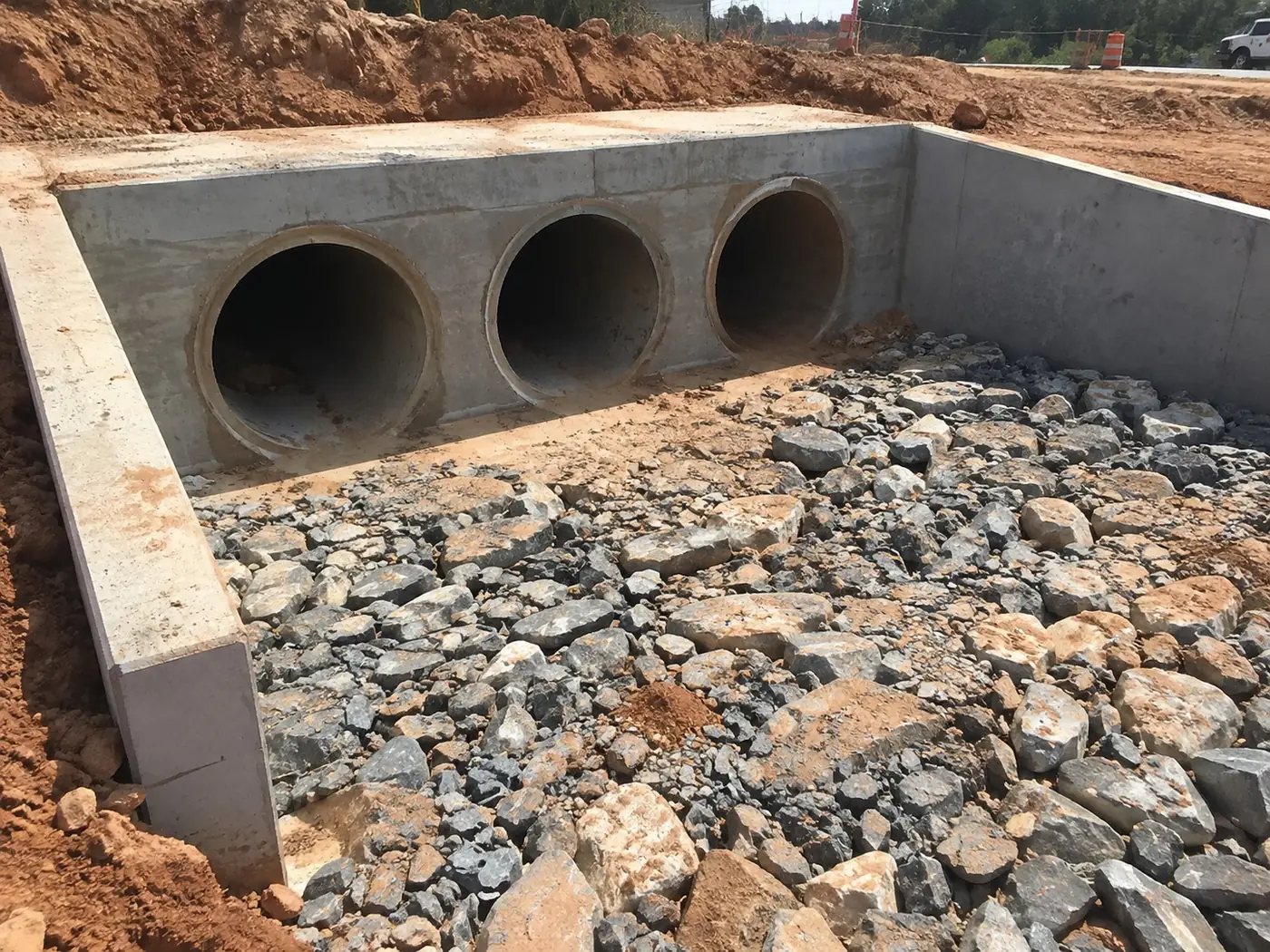
Every stormwater pipe has to end somewhere, and in the Illawarra that's often a creek bank, a lagoon edge or the back of a beach. Without a solid concrete structure at the outlet, heavy rain coming off the escarpment can scour out the ground, undermine the pipe and send sand and soil downstream. We build stormwater outfall structures in Wollongong that hold firm when the water arrives.
Our crew forms and pours headwalls, wingwalls, aprons and energy dissipators, and places the scour protection that keeps them from being undercut. We work from engineering drawings and council standards, plan around tides and weather, and keep sediment and cement out of the waterway. Let us know about your project and we'll set up a time to inspect the site.
Outfall Structures We Build Around Wollongong
Pipe Headwalls
The headwall is the face of the outfall, holding the end of the pipe in place and stopping the surrounding fill from washing away. We form and pour cast-in-situ headwalls to the drawings, or set precast units where the design allows and access is tight.
Wingwalls and Return Walls
Angled wingwalls guide the flow out of the pipe and keep the banks either side from slumping into the channel. Their length, angle and footing depth come from the drainage designer, and we set them out carefully so they tie neatly into the headwall.
Aprons and Energy Dissipators
Water leaving a pipe during a heavy storm carries a lot of energy. Concrete aprons, baffle blocks and dissipator structures slow it down before it reaches natural ground, reducing the chance of the outlet eating a hole in the bank or beach below.
Scour Protection
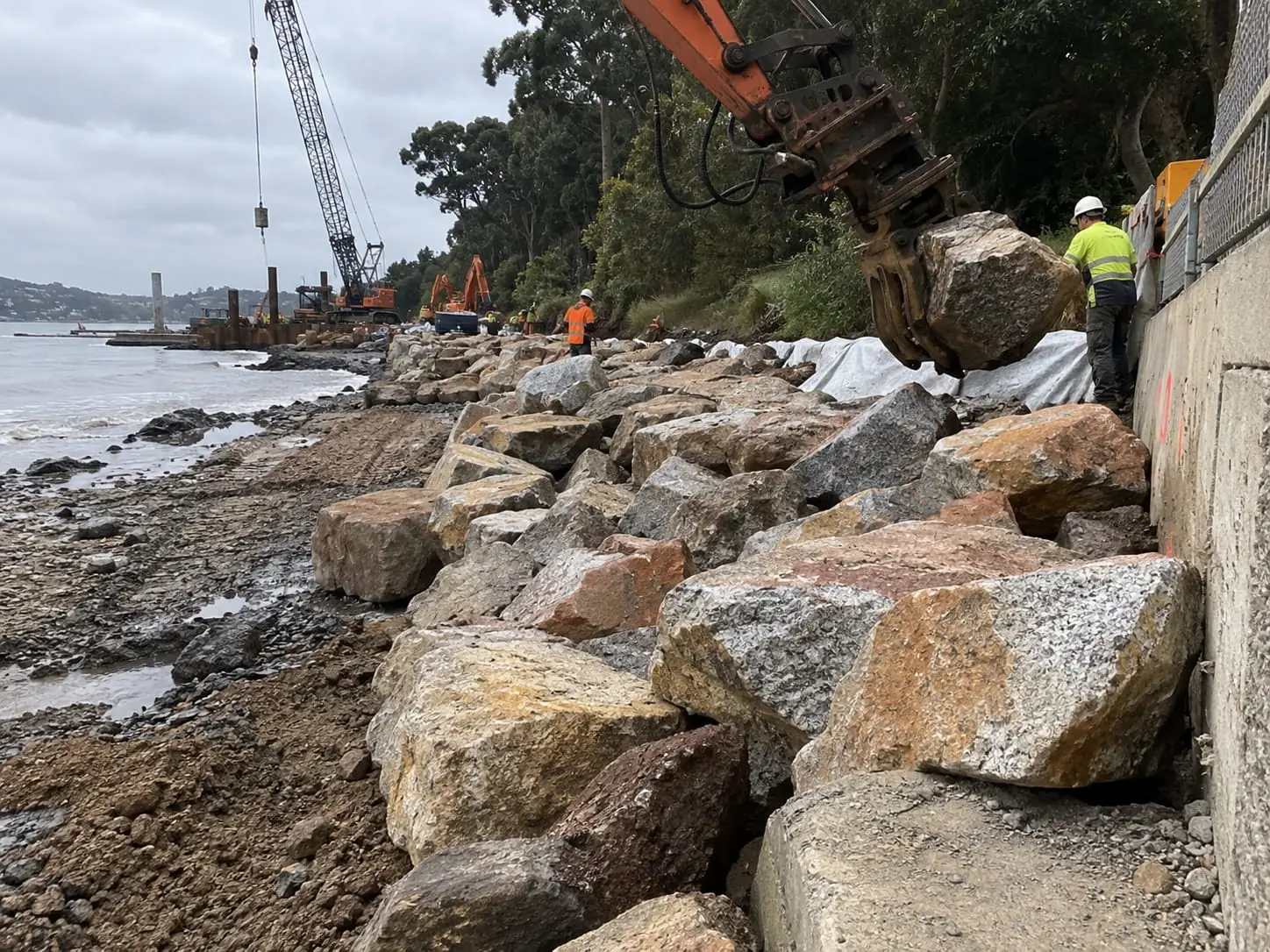
Beyond the apron, rock rip-rap, grouted rock or concrete mattresses can be used to protect the channel bed where the flow lands. We place these to the designed extent so the outfall isn't undermined after the first big East Coast Low.
Grates, Flap Valves and Fittings
Many outfalls need safety grates, debris screens or flap valves that stop tides and sand pushing back up the pipe. We cast in the brackets, anchors and set-downs those fittings need, ready for the supplier or plumber to install.
Rebuilding Damaged Outfalls
Undercut headwalls, cracked aprons and outlets buried in sand are common along beaches and creek mouths. We can demolish and rebuild failed sections, or extend and reinforce an existing outfall when the engineer's assessment recommends it.
Three Ways to Start Your Outfall Project in Wollongong
Drainage structures involve designers, councils and sometimes state agencies, so it helps to bring us in early. Whatever stage you're at, one of these will get things moving.
- Share the civil drawings: If the headwall, apron and scour protection are already designed, mention the plans in the form and we'll price the concrete works to them.
- Tell us about the problem: Got an eroding outlet or an undermined headwall? Describe where it is and what's happening, and we can suggest whether you'll need an engineer involved.
- Meet us on site: We'll look at access for trucks and pumps, how wet the area stays and how tides or creek flows will affect the work program.
Outfall jobs usually start with excavation and dewatering, and old structures may need concrete demolition before anything new goes in. Where the outlet sits against an eroding bank or dune, it often makes sense to look at coastal retaining walls or grouted rock revetments at the same time.
Why Builders and Civil Contractors Use Our Drainage Crew
Built to the Engineering Drawings
Outfalls on public land are typically built to council engineering standards and the designer's plans. We follow the specified dimensions, reinforcement and concrete grade, and flag any clash on site before it becomes a problem.
Tough Mixes for Wet, Salty Sites
A headwall at a beach or lagoon edge sits in salt, sand and running water. Where the engineer specifies a higher-durability mix and extra cover over the steel, that is exactly what goes into the forms.
Working Dry in Wet Places
Creek beds and beach outlets rarely stay dry for long. Sandbag bunds, temporary diversions and pumps keep water out of the work area so the concrete is placed and cured properly.
Sediment and Washout Controls
Cement slurry and loose sediment shouldn't end up in a creek or on the sand. Silt fences, contained washout areas and careful clean-up are part of how we run every drainage job.
Coordinated With Your Civil Team
We often work alongside excavation and pipelaying crews, surveyors and inspectors. Hold points for reinforcement and formwork checks are booked in early so the job doesn't stall.
Honest Scheduling Around Weather
There's no point pouring a headwall with a big storm about to send water down the pipe. We watch the forecast closely and would rather move the pour than risk fresh concrete being washed out.
A Look at Our Wollongong Concrete Work

Stormwater Outfall Questions
Common questions from councils, developers and landowners about headwalls, aprons and outlets on Illawarra creeks, lagoons and beaches.
It is the concrete structure at the point where a stormwater pipe discharges into a creek, channel, lake or the ocean. The headwall holds the pipe end and supports the surrounding ground, while wingwalls, an apron and scour protection manage the water as it leaves. Together they stop erosion at the outlet and protect the pipe from being undermined or blocked.
Almost always. Outfalls usually connect to public drainage, discharge onto council or Crown land, or affect a waterway, so they typically need council approval and may also involve state agencies, particularly near beaches, lagoons or fish habitat. In coastal areas the Coastal Management Act 2016 and related planning policies can apply. Talk to Wollongong City Council, Shellharbour City Council or Kiama Municipal Council early, and expect a civil or coastal engineer to prepare the design.
Yes. Larger rural and semi-rural blocks often have pipes crossing under driveways or discharging into a gully or dam, and those outlets benefit from a proper headwall and apron just as much as public ones do. On private land the design is usually simpler, but it's still worth having the size and discharge point checked so you don't create problems for a neighbour downstream.
The usual culprits are scour and sand movement. Big swells and storm runoff can strip sand from around the apron and toe, leaving the structure undercut, while at other times sand builds up and blocks the outlet. Salt exposure also corrodes reinforcement in older concrete, leading to cracking and spalling. Good design deals with all of this through deeper footings, generous scour protection and durable concrete with adequate cover.
Both have their place. Precast headwalls are quick to install and suit standard pipe sizes, especially where time on site is limited by tides or access. Cast-in-situ structures can be shaped to awkward sites, larger pipes and custom wingwall angles. Your engineer will usually specify one or the other, and we're happy to discuss which makes more sense for your site at the inspection.
More services that pair well
Planning a new outfall or fixing an old one?
Tell us about the pipe, the site and any drawings you have, and we'll come back with a clear price.